What Is an ADU?
A Modern Guide to Accessory Dwelling Units (And Why They’re Changing the Way We Live in California)
I. Introduction: Why Everyone’s Talking About ADUs
ADUs aren’t new — but the way we build them now is.
So why are more and more homeowners turning to ADUs?
California’s housing landscape is changing, and it’s happening right in people’s backyards. Accessory Dwelling Units (ADUs) have gone from obscure policy experiments to one of the most powerful tools homeowners have to:
- Generate income
- Support family
- Build long-term property value
Whether you’ve heard them called in-law units, granny flats, casitas, or just “that little house in the back,” one thing is clear: ADUs aren’t a trend — they’re a shift in how we think about land use, freedom, and lifestyle.
And the good news? If you live in California, building an ADU has never been more possible — or more supported by policy.
That’s not to say it’s effortless (this is still California), but between new laws, better products, and smarter technology, the process is significantly easier than it used to be.
II. What Is an ADU?
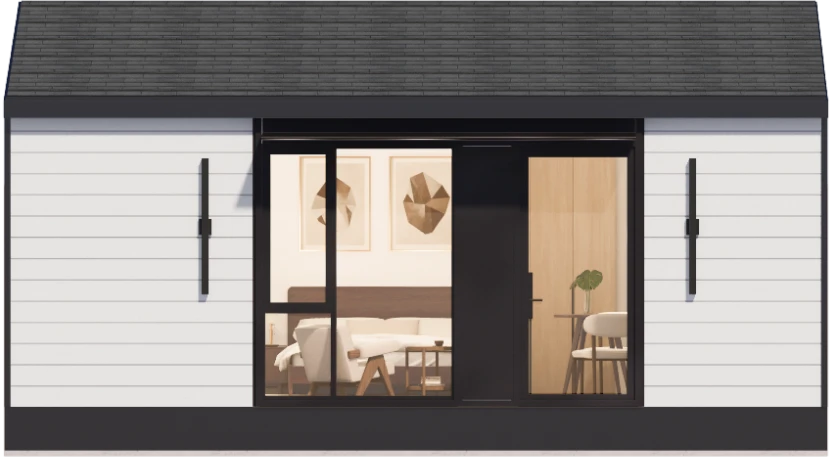
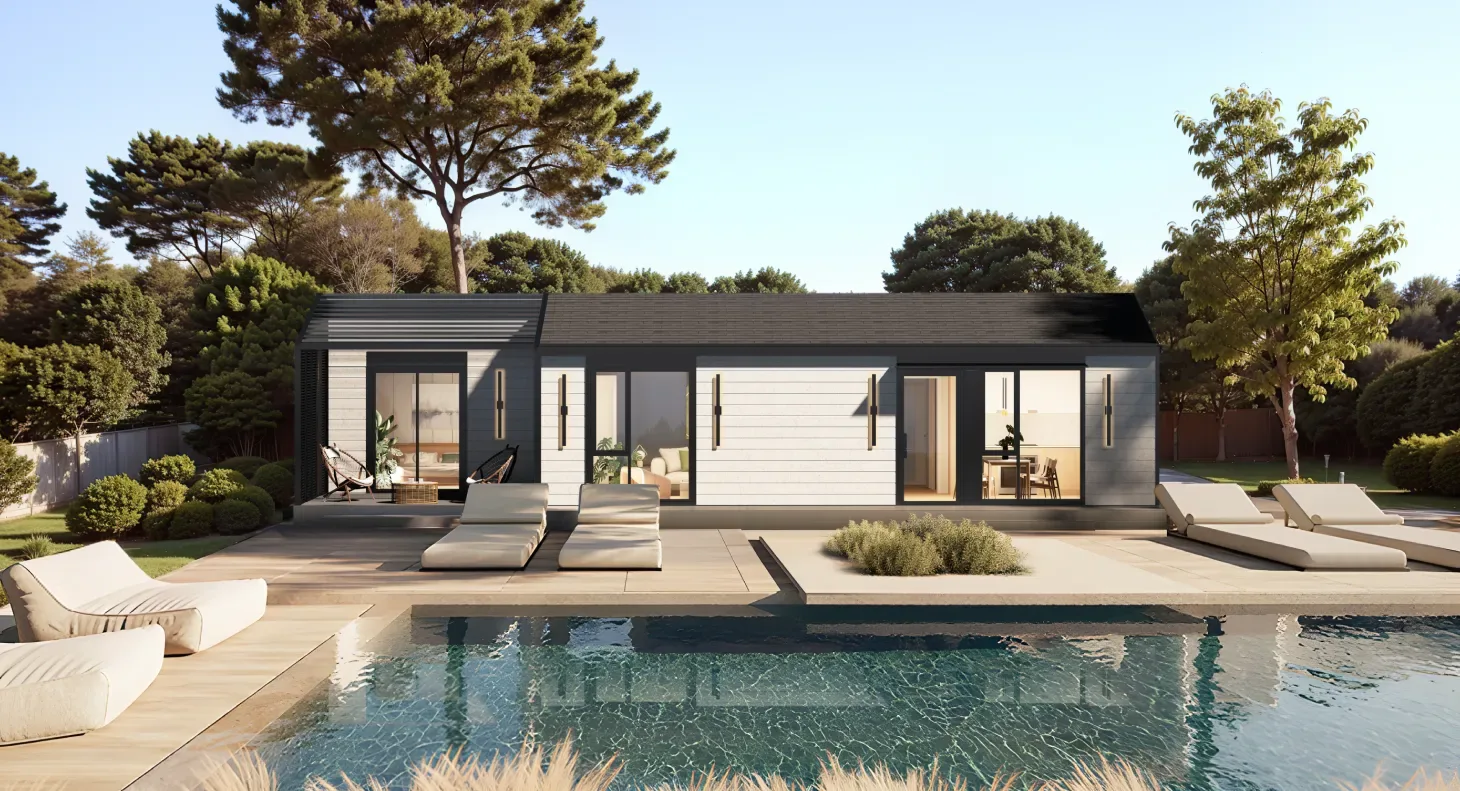
An Accessory Dwelling Unit (ADU) is a secondary residential unit located on the same lot as a primary home. It’s a fully functional, self-contained living space — complete with its own kitchen, bathroom, and entrance.
What makes ADUs unique is their legal classification: they’re explicitly allowed under California state law and increasingly encouraged by local governments to address housing shortages while preserving neighborhood character.
III. Types of ADUs (At a Glance)
IV. What Can You Use an ADU For?
ADUs are as flexible as the lives they support. Common use cases include:
🏡 Rental Income
Rent out a 1- or 2-bedroom ADU for $2,000–$3,500+/month depending on your location.
👨👩👧 Multigenerational Living
Give aging parents or adult children their own space — just steps from the main home.
✨ Guest House / Hosting
Offer visiting friends and family a private place to stay. Some homeowners also use their ADUs for short-term rentals like Airbnb.
💼 Home Office or Studio
Escape the noise. Work, create, or run a business from a separate, peaceful space — a post-COVID trend that’s here to stay.
💰 Resale Value Boost
A legal, permitted ADU often adds 1.5–2x its cost in resale value.
If your home is valued at $1,000/sq ft and you build for $500/sq ft, you’re potentially creating $500 in value per square foot — assuming your ADU is high-quality, well-designed, and desirable to the next buyer.
V. Is an ADU Right for Your Property?
Most single-family properties in California now allow ADUs by law, but exact rules vary by city and lot.
Key factors include:
- Setback requirements: Distance from property lines and other structures (you’ll need clearance on the sides, rear, and from your main house)
- Access to utilities: Detached ADUs typically require new sewer and water connections
- Lot size and shape: You’ll need enough usable space for the unit and foundation
- Fire access in hillside zones: Some lots require fire department review
- HOA or historic district restrictions: These may limit size, design, or placement
👉 Want to know if your lot qualifies?
We built a free tool for California homeowners to explore their options.
VI. ADUs in California: Why Now?
In recent years, California has passed some of the most ADU-friendly laws in the country.
Cities can no longer block or delay projects without cause. Many now offer:
- Fee waivers
- Fast-track permitting
- Pre-approved plan sets
In short: it’s never been a better time to build.
VII. The LiveLarge Approach: We Don’t Just Build ADUs — We Build Systems
Most prefab companies sell you a box. We don’t.
At LiveLarge, we created the Interwoven Home — a fully integrated system that combines:
- Your main residence
- A detached ADU
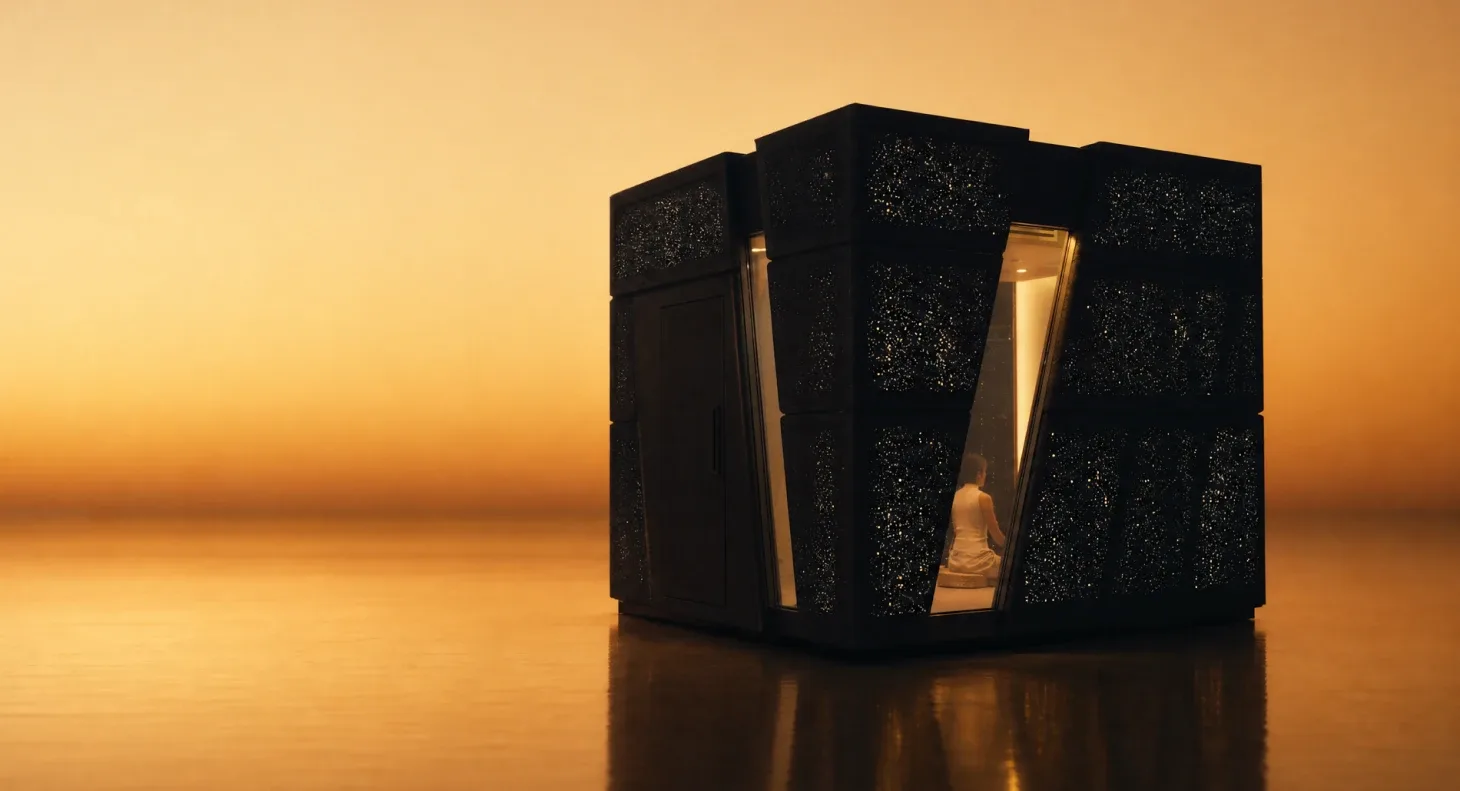
- And optional PODs (offices, studios, rentals)
We also handle the entire delivery system — the process that breaks most projects.
Our scope includes:
- Permitting (often pre-approved at the city or state level)
- Custom site work, utility trenching, foundation
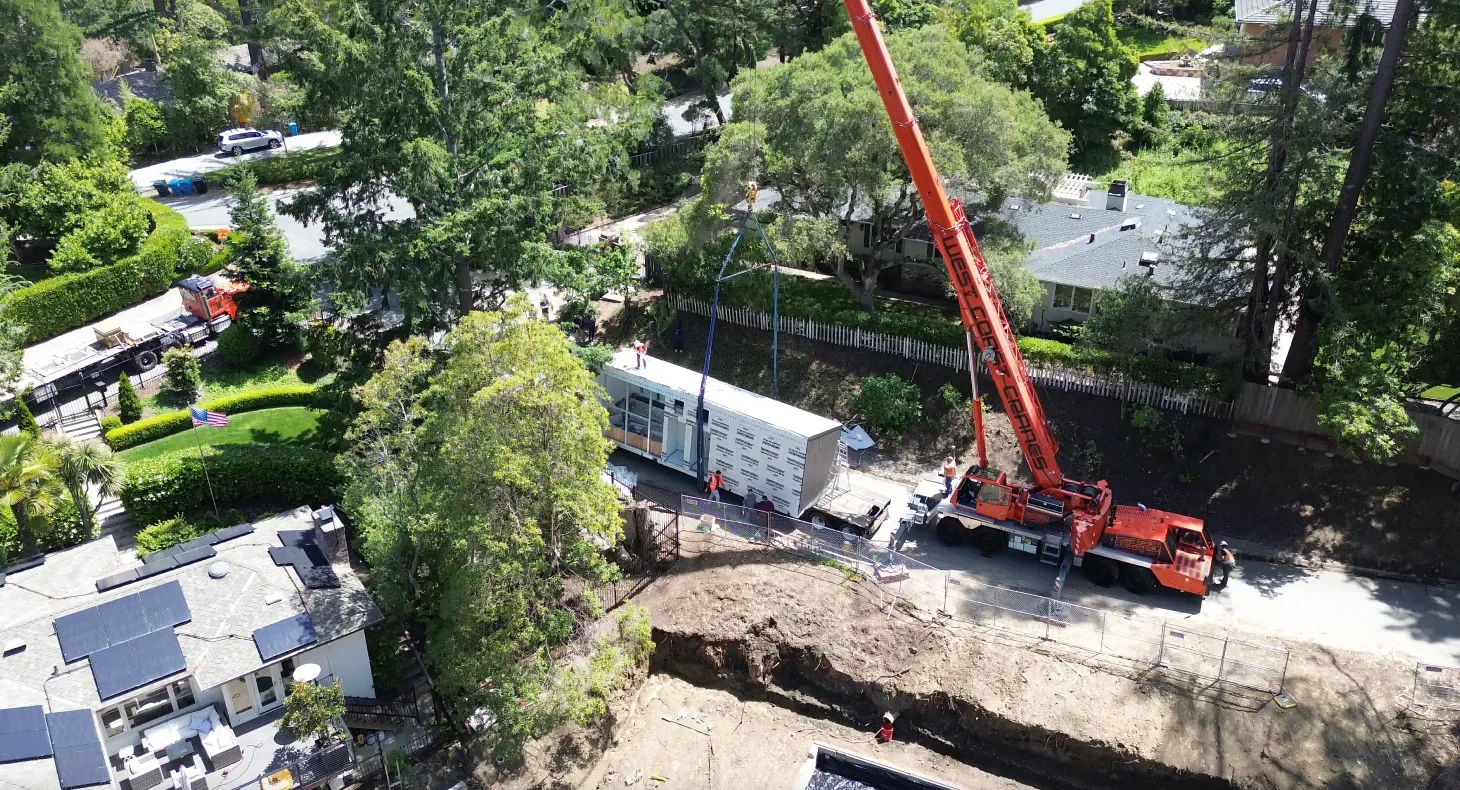
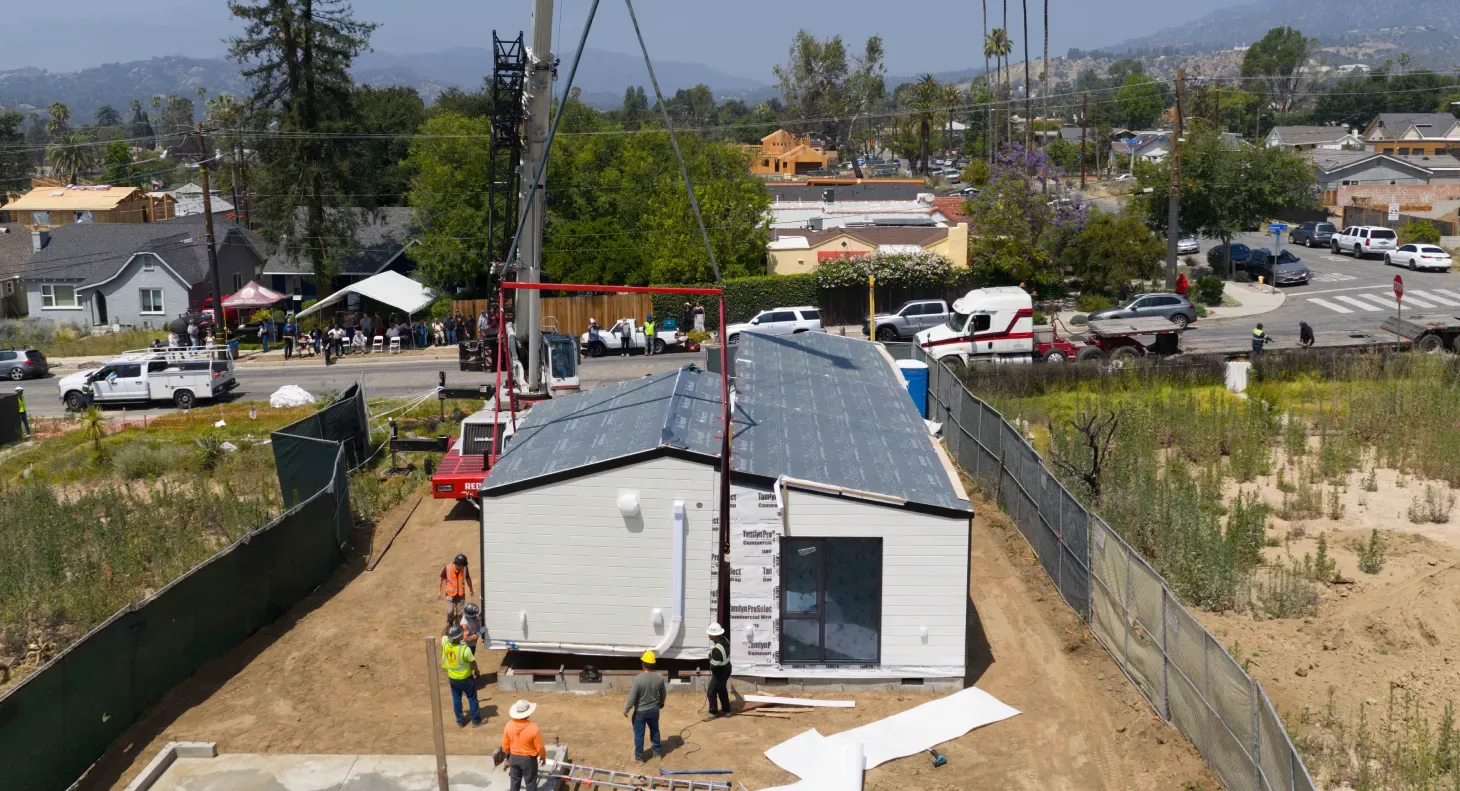
- Delivery + craning — including logistics and access planning
- Installation + punch list — we stay until it’s beautiful and functional
Our units feature:
- Steel frame construction (quiet, termite-proof, fire-resistant)
- Luxury interiors and triple-paned windows
- Manufacturing in Guangzhou, China, where we control quality, sourcing, and delivery
- Live showrooms in San Jose and San Marino
💬 “Prefab is only powerful if it’s predictable. That’s why we stay with you from the first sketch to final inspection.”
VIII. How Much Does an ADU Cost?
Here’s what all-in pricing looks like with LiveLarge (unit + permitting + site work):
📌 Want a detailed breakdown? → [See full cost article]
IX. ADUs vs Traditional Additions: What’s the Difference?
Traditional ADU builds can be great — if you have the time, budget, and energy to manage a full construction process.
Here’s how prefab compares:
If you want full creative control, traditional may work.
If you want speed, quality, and less stress — prefab wins.
X. Common ADU Myths (and the Truth)
XI. Why Now Is the Time
Between rental demand, rising property values, and faster permitting, this is the moment to invest in your property.
In the Bay Area, we’re seeing a resurgence of talent returning from out of state — driven by AI and tech growth — which is pushing up prices again.
In Los Angeles, the upcoming Olympics and city transformation projects are expected to bring a wave of visitors, demand, and long-term value.
The smart move? Build now, before costs and permitting times rise again.
XII. Next Steps
✅ Check Your Property: Run your address through our free tool → [Check My Backyard]
🏡 Visit a Showroom: Walk through a real LiveLarge unit in San Jose or San Marino → [Book a Tour]
📞 Talk to a Pro: Not sure where to start? Let’s explore your options → [Book a Call]